
Should Families Arrive at the Cruise Port the Day Before?
Arriving the day before is usually the safer family plan when a flight or long drive separates home from the port. Compare the real cost and timing before deciding.
Compare real trip costs, protect the family schedule, and choose the vacation that fits before opening another dozen booking tabs.
Arriving the day before is usually the safer family plan when a flight or long drive separates home from the port. Compare the real cost and timing before deciding.
A balcony can give adults usable space during naps and early bedtime, while an inside cabin can protect the budget and encourage better use of the ship.
A nonstop flight usually creates the simpler toddler travel day, but a well-timed connection can beat a difficult nonstop schedule. Compare the complete trip before booking.
Create a separate vacation-extras budget for souvenirs, photos, snacks, upgrades, and impulse purchases—without dipping into the emergency reserve.
Early dinner usually protects a toddler’s normal rhythm, while later dinner can preserve port time. Compare the entire evening—not just the reservation time.
Transportation costs do not stop with airfare or fuel. Build a separate trip-mobility budget from each day’s parking, tolls, transfers, rides, and return travel.
Departure day works best with one short, flexible activity between checkout and the trip home—not another full sightseeing day squeezed around luggage and rest.
The last morning combines luggage, breakfast, waiting, transportation, and a tired child. Build the plan backward from the first fixed commitment after the cruise.
The earliest arrival is not always the easiest family itinerary. Compare wake-up time, the complete airport day, rest, lodging access, and what the arrival actually lets you do.
Skip the unreliable daily guess. Count the meals your family will actually need, choose a plan for each one, and add the costs that menus often leave out.
An overnight stop costs money and vacation time, but it can protect arrival day. Compare the real driving day, lodging cost, child schedule, and usable destination time.
A good sea day does not need a packed schedule. Build one anchor activity around meals, quiet time, short waits, and an easy retreat to the cabin.
The advertised activity is only part of a port day. Compare transfers, waiting, meals, child requirements, and the return to the ship before booking a family excursion.
Most toddler vacation days need one main activity, not a checklist of reservations. Use an anchor-plus-optional plan to protect meals, rest, and room for a good surprise.
A flexible room can cost more, but the cheapest prepaid rate is not automatically the lowest-risk choice. Compare the premium, cancellation window, and money actually at risk.
A wet forecast does not require an expensive replacement itinerary. Prepare one indoor outing, a room-based fallback, and a clear decision time so the day stays manageable.
A cheaper room can add driving, parking, and difficult midday returns. Compare the full stay cost and the trips your family will actually make before paying for location.

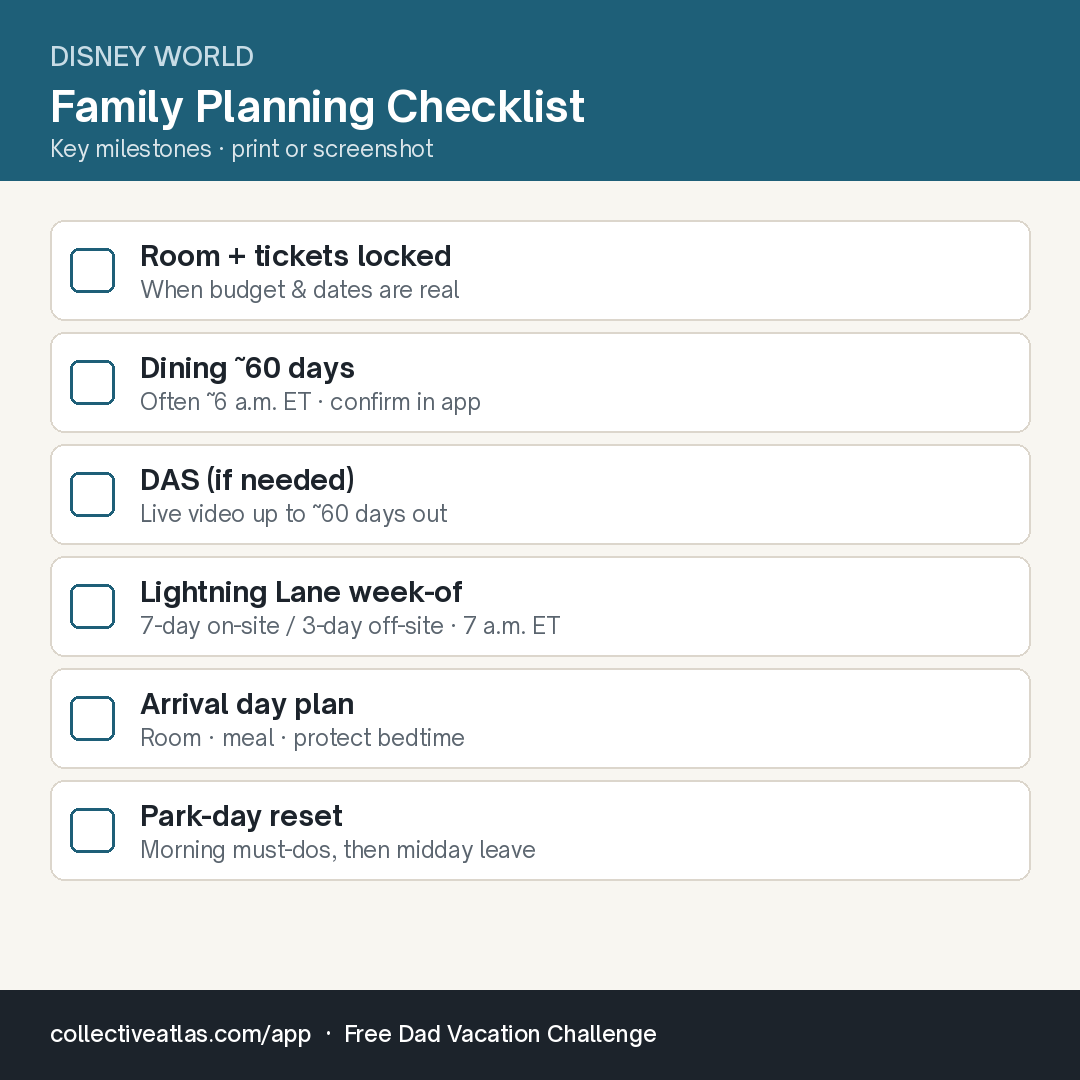
A practical countdown for lodging, tickets, 60-day dining, and week-of Lightning Lane, with a family checklist and room for a midday reset.
Cruise embarkation day combines travel, documents, luggage, waiting, meals, and a new environment. Use this realistic plan to keep essentials close and give the first day one clear rhythm.
Arrival day works best when it has one job: get the family settled and make tomorrow easier. Use this simple itinerary for meals, check-in, movement, and bedtime.
Do not let flights, lodging, and tickets consume the entire vacation budget. Build a reserve from the costs most likely to change, then keep optional spending separate.
Four nights give a family enough time for two strong activity days—if arrival, recovery, and the drive home are treated as part of the vacation. Use this flexible template for your next trip from Kentucky.
A sightseeing pass can look like a bargain until naps, weather, and travel time shrink the itinerary. Compare the attractions your family will actually visit before buying a bundle.
A six-hour route rarely means a six-hour family travel day. Use this practical buffer method to plan stops, meals, traffic, and arrival without starting the vacation exhausted.
A kitchen can lower your family’s meal bill—but not automatically the total trip cost. Use this break-even worksheet to compare lodging, food, fees, and the work of cooking on vacation.
Should your family drive or fly? Compare the whole journey with a simple budget worksheet, a door-to-door time example, and a decision rule that leaves room for tired kids.
A practical fall-break comparison for families choosing between a warm beach reset and a mountain getaway without overspending.
Use season, child age, lodging value, and recovery time to decide whether an indoor resort or outdoor waterpark makes the better family getaway.
Compare the true costs, planning load, kid flexibility, and parent recovery of a family cruise and a theme-park vacation.
Choose a toddler-friendly beach destination using safe access, short transfers, nap logistics, food convenience, and weather backups.
A repeatable method for finding a memorable two- or three-night family road trip without allowing lodging and food to consume the budget.
Build a realistic five-night beach budget that includes transportation, lodging, food, activities, taxes, parking, and a real buffer.